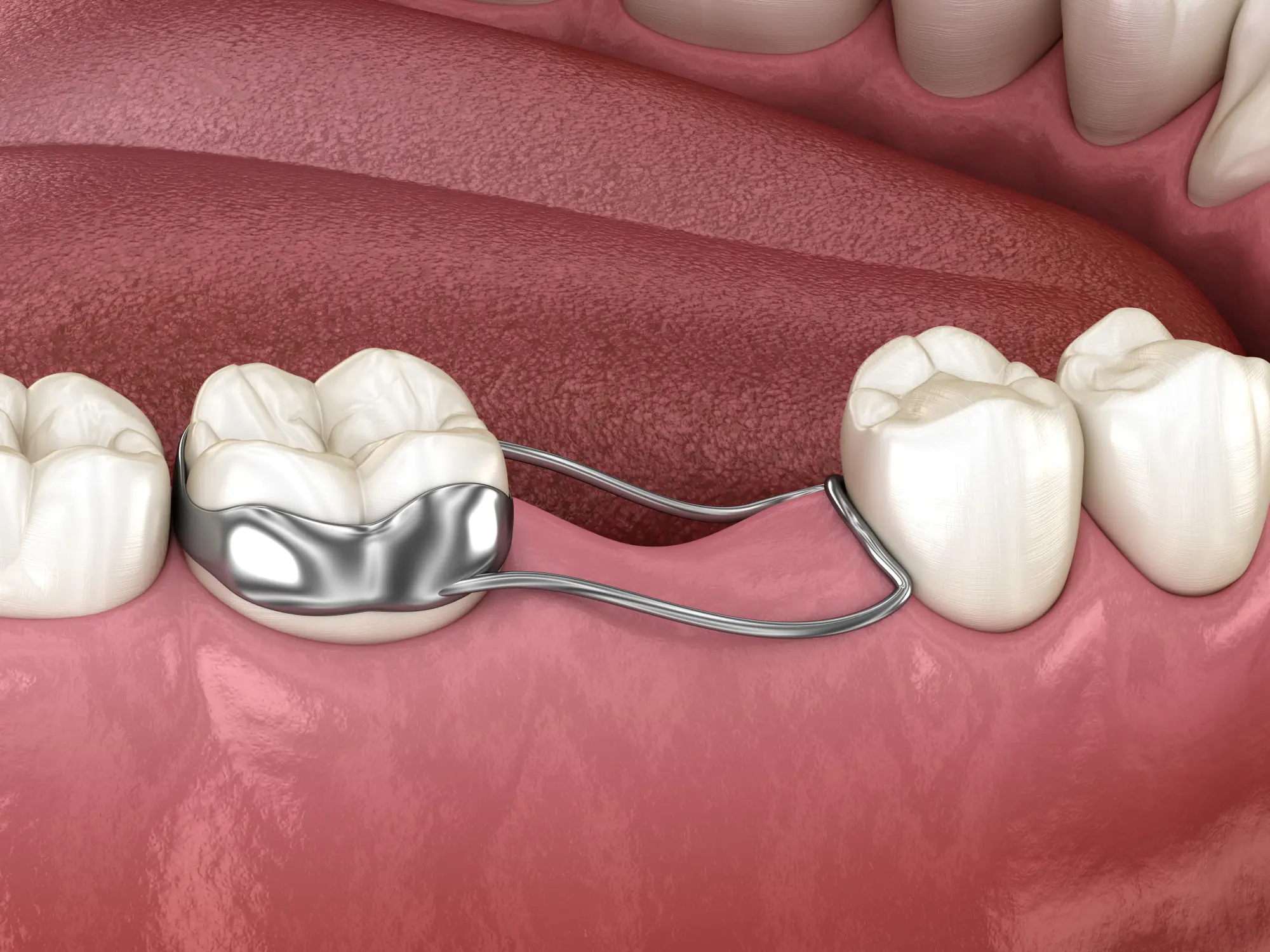
Space Maintainers: Preserving Jaw Alignment After Early Baby Tooth Loss
A lot of parents haven't heard of space maintainers, but here's something important you should know: a space maintainer is a small, critical appliance that can help prevent future surgery on your child. It's one of those things that doesn't get talked about enough, but when your child needs one, it can make a significant difference in their dental development and future orthodontic health.
If you've recently noticed that your child lost a baby tooth unexpectedly or earlier than you'd expect, this blog is for you. We're going to explain what a space maintainer is, why your pediatric dentist might recommend one, and why acting quickly matters. At Sorrento Valley Pediatric Dentistry in San Diego, we see early tooth loss more often than parents realize, and we want families to understand their options and why space maintainers are such an important tool.
Let's start with the basics and work our way to understanding why this small appliance can prevent big problems down the road.
What Is a Space Maintainer and Why Does Your Child Need One?
A space maintainer is a small, simple appliance that we cement onto a tooth after a baby tooth has been lost or removed. It sounds more complicated than it is. Imagine a tiny bridge or holder that stays in place to preserve the gap where the lost tooth used to be.
Here's why it matters: when a baby tooth is removed or lost, the teeth on either side of that gap start to want to shift. They naturally tip inward, moving toward the empty space. This seems like a small movement, but it creates a big problem. The permanent tooth that's supposed to come in at that location gets blocked. If there's no space left for it, the permanent tooth can't come down properly. It becomes stuck or impacted, trapped underneath the gums.
A space maintainer prevents this shifting. By holding the space open, we ensure that when your child's permanent tooth is ready to come in, there's room for it. It's a preventative measure that stops a cascade of problems before they start.
Think of it this way: your child's jaw and tooth development are a carefully choreographed process. Each tooth needs to come in at the right time in the right place. When a baby tooth is lost early, that choreography gets disrupted. A space maintainer helps us get everything back on track.
Understanding Early Baby Tooth Loss
Many parents assume baby teeth fall out on their own schedule, around age six or seven. But early tooth loss happens a lot more often than people think, and it can happen for several different reasons.
The number one reason we see early tooth loss is cavities and infections that result from untreated dental decay. This goes back to what we've talked about before: cavities don't stay small. They progress. They can become infected. When the infection gets serious enough, the tooth might need to be extracted to stop the spread of infection. That's when you've got an early tooth loss situation.
Another reason a baby tooth might come out early is for orthodontic reasons. Sometimes one tooth is pushing another one out of the way, unexpectedly and for no clear reason. This can happen when there's crowding or when teeth are trying to position themselves in ways that interfere with each other.
There are also some very rare medical conditions that can cause early tooth loss. These are uncommon, but they happen.
If you suspect your child has lost a tooth early or unexpectedly, it's a good reason to come see your pediatric dentist right away. We can evaluate what happened and discuss your options for maintaining the space.
The Domino Effect: What Happens Without a Space Maintainer
Here's the timeline to understand: when a baby tooth is lost early, the permanent tooth that's supposed to replace it might not come in for years and years. Your child could be waiting several years for that permanent tooth to arrive. During all that time, the neighboring teeth are under pressure to close the gap.
And they will close the gap if nothing is stopping them. The front tooth and the back tooth start to tip inward. This happens gradually, but by the time the permanent tooth is ready to come in, there might not be enough room. The permanent tooth can't find a path down. It gets stuck or impacted beneath the gums.
This creates several problems. First, your child has a permanent tooth that's not in its proper position. Second, there's a gap or missing tooth that affects function and appearance. Third, the misalignment can affect how other teeth develop and come in.
If you do nothing about early tooth loss, the worst-case scenario is that you end up needing oral surgery. An impacted or stuck tooth sometimes needs to be surgically removed by a specialist. This is invasive, it's expensive, and it's entirely preventable with a space maintainer.
A space maintainer is the simple, low-cost way to prevent this cascade of problems. It's a small investment that prevents much bigger intervention down the road.
Can Braces Fix It Later? Understanding the Limitations
One thing we hear from parents is, "Can't we just fix this with braces later?" It's a reasonable question, and the answer is: sometimes, but not always. And even when braces can help, you're creating a much more complicated situation than if you'd just used a space maintainer early on.
Here's the thing about teeth and movement: not all teeth are equally easy to move. Back molars, especially, are problematic. If it's a baby molar that's been lost early and the space has collapsed, you're dealing with a permanent molar that might have three roots. Teeth with multiple roots are extremely difficult to move and upright, even with braces.
Sometimes the only solution for a stuck tooth that can't be moved is extraction by an oral surgeon. You've now gone from a simple space maintainer situation to a surgical situation. That's a much bigger deal for your child.
This is why prevention is so much easier than correction. If we maintain the space when the tooth is first lost, we avoid creating a problem that's hard to solve later. We keep the permanent tooth's path clear so it can come in normally.
Space Maintainer Concerns: Answering Parent Questions
We get a lot of questions about space maintainers, so let's address the most common ones.
How long does my child need to wear a space maintainer?
Space maintainers are usually placed for several years if your child is young. But the key timing is this: we want to wait until the permanent tooth that's supposed to come in is actually visible in the mouth. That's when we know it's on its way down. Your individual pediatric dentist will assess your child's situation and give you an estimated timeline for placement and removal. Every child is different, so the duration varies.
Are space maintainers uncomfortable? Will my child hate wearing this?
Most children don't notice a space maintainer at all. I know from an outside perspective it might look uncomfortable, but when it's in your child's mouth, it becomes something they get very used to very quickly. It's similar to what happens when someone gets braces. At first, braces feel foreign and noticeable. But after a while, you just forget about them. They become part of your mouth. A space maintainer works the same way. Your child will adjust within days or maybe a week, and then they won't think about it.
What if my child's space maintainer gets loose or breaks?
Let us know right away. We can repair or replace it quickly. The important thing is not to leave the space unprotected for extended periods.
Will a space maintainer affect my child's speech or eating?
Most children adapt so well that these functions aren't affected at all. In rare cases where a child is very young or sensitive, there might be a minor adjustment period, but it's temporary.
Taking Action: When to See Your Pediatric Dentist
If you notice that your child has lost a baby tooth early or unexpectedly, that's your signal to call your pediatric dentist. Don't wait. Early evaluation is important because the sooner we place a space maintainer if one is needed, the better we can prevent tooth shifting.
When you come in, we'll evaluate your child's specific situation. We'll look at which tooth was lost, how long the permanent tooth is likely to take to come in, and whether a space maintainer is the right option. We'll also discuss the timeline and answer any questions you have.
At Sorrento Valley Pediatric Dentistry in San Diego, we work with families to find the best solution for each child's situation. Every child is different, and we make recommendations based on individual needs.
A Small Appliance, Big Impact
Space maintainers are a perfect example of how preventative dentistry works. A small, simple appliance placed early prevents complicated problems later. You avoid the need for oral surgery. You avoid the need for complex orthodontic treatment that might not even be possible. You keep your child's dental development on track.
If your child has lost a baby tooth unexpectedly, or if you have concerns about your child's dental development, we're here to help. Give Sorrento Valley Pediatric Dentistry a call at (619) 432-2112. Dr. Nadia and our team will evaluate your child and discuss the best options for maintaining healthy development and proper alignment. Early intervention is always better than trying to fix problems later.
Related Posts

The Oral-Systemic Link: How Your Child's Dental Health Impacts Overall Growth
Space Maintainers: Preserving Jaw Alignment After Early Baby Tooth Loss
Preventive Power: How Dental Sealants and Fluoride Stop Cavities Before They Start